Pull up three different real estate sites and search Davis Junction, Illinois this month, and you will get three different stories about the same village. One shows prices sliding. Another shows prices climbing by double digits. A third shows a number that does not match either. None of the three is wrong. That is the part worth sitting with before you make an offer or set a listing price here.
As of May 2026, Redfin's tracking showed Davis Junction's median sale price at $268,899, a 5.4 percent drop from the year before. Around the same time, Homes.com was reporting a median sale price of $288,545 over the trailing twelve months, up 15 percent from the previous twelve-month stretch, based on 47 recorded sales. Movoto, meanwhile, had the median list price sitting at $313,000 in June 2026, essentially flat month over month, with homes spending a median of 34 days on the market.
If you are trying to decide what your house is worth, or what you should offer on one, that spread is not a rounding error. It is the difference between pricing a listing at $270,000 and pricing it at $310,000.
Why the Numbers Disagree Without Anyone Being Wrong
The short answer is that each site is measuring something slightly different, and in a village this small, slight differences in methodology produce large differences in outcome.
Redfin's figure is a sold price, snapped at a single month. Homes.com's figure is also a sold price, but averaged over a full year. Movoto's figure is not a sold price at all. It is what sellers are currently asking. List price, one-month sold price, and twelve-month sold price are three legitimate but distinct measurements, and none of them is required to move in the same direction at the same time.
Layer in the second factor: volume. Homes.com's own count puts total sales at 47 over twelve months, which works out to under four closings a month in a village of roughly 2,750 residents. When your monthly sample is three or four homes, one new-construction closing at the high end or one older resale at the low end can swing a median by tens of thousands of dollars. A national market absorbs that kind of noise across thousands of transactions. Davis Junction cannot.
This is the mechanism behind the headline number, and it matters because it changes what question you should be asking. The right question is not "which website has the correct median." It is "what is actually selling right now, and where does my property or my offer fall relative to that."
What's Actually Moving Behind the Number
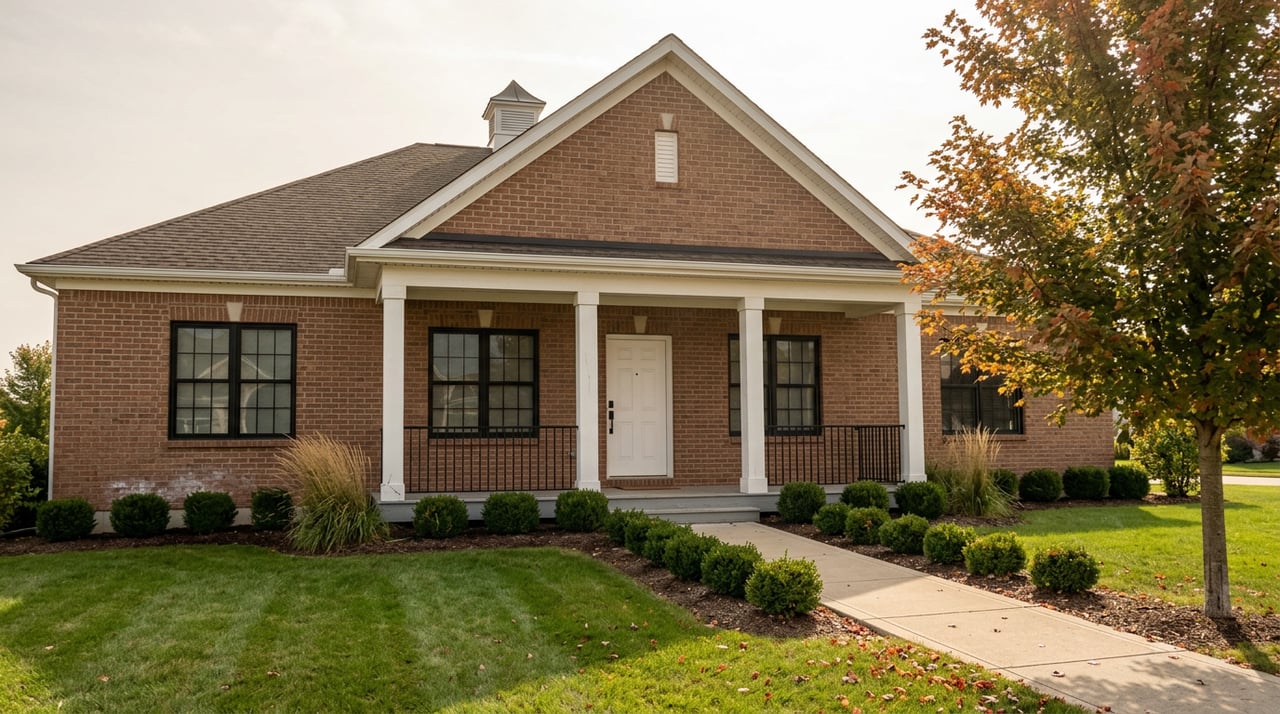
The clearest answer to that question is Harvest Glenn, the village's active subdivision and, per current listing records, its only one. Lots there come with city water, city sewer, and utility service from ComEd and Nicor already in place, and builders are not restricted to a single approved list, which has kept a steady run of new construction coming to market. Recent listings there have included a 1,545-square-foot open-concept plan with a three-car garage and a separate 1,410-square-foot three-bedroom ranch plan, both first-floor-laundry layouts typical of the move-up and move-down buyers this village attracts. Part of Harvest Glenn is also built out for residents 55 and older, which adds a second, distinct buyer pool into the same small sales pool that also includes young families and first-time buyers.
That mix is exactly the kind of thing that can push a monthly median in either direction. A cluster of new-construction closings in one price band lifts the number. A handful of older resale homes closing the same month pulls it back down. Both can be true in the same quarter, which is functionally what happened between the Redfin snapshot and the Homes.com trailing average.
The Village Is Investing Beyond Rooftops
Residential construction is not the only signal worth watching. Davis Junction's planning and zoning commission held a public hearing in spring 2025 on a second subdivision entirely separate from Harvest Glenn: a commercial project east of Route 251 and the railroad tracks, laid out as eight two-acre lots zoned C-3, with two new entrances onto Illinois 72 and three local streets built to serve them. Local reporting from that same period tied part of the project's funding to Illinois's Downtown's Main Streets Capital Grant program, and connected it to the village's Junction Way Reconstruction Project, which at the time had contracts submitted to the Illinois Department of Transportation for approval covering paving, drainage, and traffic control work. A splash pad addition at the village park, funded through the state's Open Space Land Acquisition and Development grant, was also moving through final design around that same point in 2025.
That 2025 infrastructure push was not a one-time event. At the village board's September 9, 2026 meeting, trustees approved bills payable of just under $72,000 and signed off on a new pickup truck purchase and generator load testing, the kind of routine capital spending that only makes sense in a village still actively maintaining and expanding its infrastructure.
Put together, this is a village building housing in one direction and commercial capacity in another, backed by state grant dollars and steady municipal spending. That is a more reliable read on where Davis Junction is headed than any single median price pulled from a portal snapshot.
A village that closes four homes a month does not have one housing market with one price. It has four transactions that happen to get averaged together, and the average will move however those four happen to land.
What This Means If You're Buying or Selling Here Now
If you are selling, do not anchor your listing price to whichever portal number happens to be most flattering. Ask what has actually closed in Harvest Glenn or in the broader resale stock in the last 60 to 90 days, and what price band those homes fell into. That tells you more than a twelve-month average that includes sales from a year ago.
If you are buying, the same logic works in your favor. A median that looks high because of a run of new-construction closings does not mean every home in the village costs that much. The older resale stock outside Harvest Glenn is part of the same small sales pool and can be priced very differently.
If you are looking at the commercial C-3 lots near the Gateway project, the relevant signal is not a residential median at all. It is absorption of those specific parcels, which is a separate and much smaller data set that a portal-level median will never capture.
A Few Direct Questions
Why do real estate websites show different prices for the same small town? Because they are often measuring different things. Some track sold prices, some track asking prices, and the time window matters as much as the metric. A one-month sold-price snapshot and a twelve-month sold-price average will rarely agree exactly, and in a village with only a few dozen annual sales, they can diverge sharply.
Is Davis Junction a buyer's market or a seller's market right now? Neither label fits cleanly with this few transactions happening each month. The more useful approach is to look at what is currently active and under contract in the specific price band and property type you care about, rather than applying a single market-wide label to a village this size.
Does the new commercial subdivision affect home values? New commercial development near Gateway typically supports long-term local services and tax base rather than moving residential prices in the short term. Its more direct relevance is to buyers specifically interested in the C-3 commercial lots themselves.
Numbers pulled from a national portal can tell you that something is happening in Davis Junction. They cannot tell you what, or why, or what it means for the specific price band you are working in. That takes someone watching the actual closings, the actual subdivisions, and the actual grant filings as they happen, not averaging them after the fact.
If you are trying to buy or sell in Davis Junction and want a read on the market that accounts for what is really moving here rather than a single portal average, Carla Benesh can walk you through it. Request a Free Market Valuation and get a number grounded in what is actually happening on the ground, not just what one website happened to average last month.