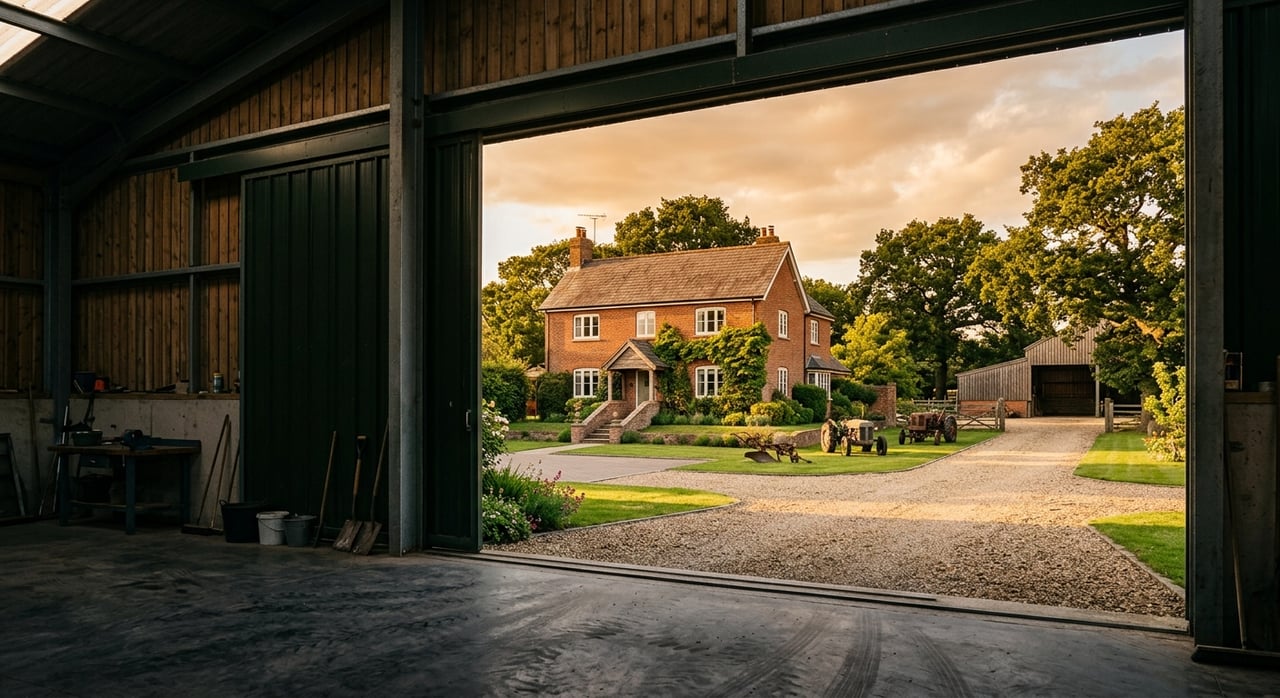
If your idea of home includes a few acres, a garden, maybe some chickens, and a barn that actually fits your plans, you are not alone. Buying land near Leaf River can be exciting, but it can also get complicated fast when zoning, access, wells, septic, and fencing all come into play. The good news is that a little planning upfront can help you avoid costly surprises and find a property that truly supports your goals. Let’s dive in.
Start With Zoning and Parcel Shape
If you are planning a small hobby farm near Leaf River, zoning is one of the first things to check. Leaf River Township includes AG-1 Agricultural, IA Intermediate Agricultural, and R-1 Rural Residence districts on the official zoning map, but the map itself is not the final word. Ogle County notes that you should confirm the zoning of any specific parcel with Planning & Zoning before moving forward. You can review the Leaf River Township zoning map as a starting point.
In Ogle County, the AG-1 district rules are geared toward preserving agricultural land and limiting scattered nonfarm development. Permitted uses include agriculture, apiculture, grazing and forage, farm buildings, farm dwelling units, livestock management facilities, private stables, and accessory uses like garages, sheds, and private greenhouses. That makes AG-1 an important zoning district for many hobby-farm buyers.
Just as important, parcel shape matters along with acreage. For a farm dwelling in AG-1, the county requires a tract defined as a farm with a minimum building-line width of 300 feet. That means a narrow parcel may not function the same way as a wider parcel, even if the acreage looks good on paper.
Why 10 Acres Often Simplifies Things
There is no single acreage number that works for every buyer. Still, Ogle County zoning makes 10 acres a meaningful threshold for many hobby-farm searches near Leaf River. In the IA district, permitted uses require at least 10 acres and 500 feet of lot width.
That same 10-acre mark also changes how accessory buildings are regulated. On parcels from 10 to 20 acres, Ogle County does not specify a cumulative accessory-building area limit, although no individual accessory structure may exceed 6,000 square feet. On parcels of 20 acres or more, there is no specified accessory-building area limit, while total building and structure coverage in IA is limited to 10 percent of the zoning lot.
In practical terms, if you want a house, animals, and more than one outbuilding, 10-plus acres is often the simplest place to start. Smaller parcels can still work well for gardening, storage, and lighter animal use, but they usually require closer attention to lot coverage, building size, and the exact use you have in mind.
Plan the House Site Before the Barn
It is easy to picture the barn first. In reality, the best hobby-farm layouts usually begin with the house site, well, septic, access, and drainage.
Ogle County’s accessory-building rules require accessory buildings to wait until the principal building is complete. Detached garages and sheds generally must be at least 10 feet from the nearest wall of the principal building unless they are structurally attached. Accessory structures also cannot violate easements or required well and septic setbacks.
That means your dream barn, greenhouse, or equipment shed needs to fit the site after the core pieces are in place. If you try to work backward, you may end up with a layout that looks good on paper but does not leave enough room for permits, drainage, or safe movement around the property.
Think Beyond the Building Footprint
A good outbuilding plan is not just about square footage. You also need enough space for truck access, feed delivery, equipment movement, manure handling, and runoff management.
Guidance from Utah State University Extension on planning barns recommends thinking through prevailing winds, sun exposure, drainage, cleaning access, animal size, durability, and future use. That is especially helpful for small hobby farms, where one barn or shed often needs to do more than one job.
If your goals are more garden-focused, you may have additional flexibility. Ogle County’s AG-1 district specifically allows a private greenhouse as an accessory use, and it also allows roadside stands for farm products under a 600-square-foot cap.
Match the Property to Your Animals
One of the biggest mistakes buyers make is choosing the animal list first and the property second. On small acreage, fencing, water, and pasture capacity usually set the limits.
According to Illinois Extension’s grazing guidance, rotational grazing helps land rest and regenerate, while continuous grazing can reduce forage quality, weaken root systems, and increase erosion. The same guidance notes that lack of water supply and fencing are common problems when people add livestock to small acreage.
That matters because acreage alone does not tell you whether a property can handle grazing. Carrying capacity can vary with soil temperature, forage mix, and precipitation, and overgrazing can happen quickly on smaller parcels.
Choose Fencing After Animal Choice
Different animals need very different fencing. Guidance from UC ANR for small-acreage landowners notes that permanent perimeter fencing and more flexible interior fencing often work best together.
The same source explains that barbed wire may be effective for cattle, but it is not a fit for goats, sheep, chickens, or other small livestock. Goats often need no-climb woven wire, horses generally do better with wooden or woven wire, and poultry or rabbits need finer mesh and sometimes a roofed enclosure.
So if you are comparing properties near Leaf River, ask yourself whether the land fits your actual use. A parcel that is perfect for raised beds, fruit trees, and a few chickens may need major upgrades before it is ready for goats, sheep, or horses.
Well and Septic Planning Matter More Than You Think
On rural property, water and waste systems are a big part of the buying decision. If you are planning a hobby farm, these details affect where you can place buildings, animals, and outdoor work areas.
The Illinois EPA’s guidance for new private wells says a well should be placed on high ground and at least 50 feet from septic tanks and barnyard or animal-confinement lots. Wells should also be at least 75 feet from septic fields or manure piles.
That spacing can shape the entire layout of the property. If the buildable area is tight, or if there are existing outbuildings and livestock areas, it is worth looking closely at how everything fits together.
Know Your Ongoing Maintenance
If the property has a private well, maintenance is the owner’s responsibility. The Illinois Department of Public Health recommends annual bacteria and nitrate testing, along with extra testing after flooding, repairs, land disturbance, or noticeable changes in taste, smell, or color.
Septic systems also need regular attention. The Illinois EPA’s septic maintenance guidance says systems should be inspected annually and are typically pumped every two to three years.
These are not small details. They are part of what makes a rural property functional, safe, and manageable over time.
Check Access Before You Fall in Love
A pretty parcel is not always an easy parcel to build on or use. Access can affect everything from permitting to driveway placement to whether equipment can reach the areas you want to use.
Ogle County’s subdivision standards say lot arrangements should allow for zoning and septic permits and driveway access from an approved street. If a watercourse separates the buildable area from the street, a culvert or other approved structure may be required.
The county also says lots generally should directly abut a street unless there is a preexisting recorded access easement. For reserve, or flag, lots, the required access strip width is at least 20 feet. If you are considering a long-lane property, it is smart to verify the access details early.
Nearby Livestock Facilities Can Affect Building Plans
If you are planning to build a non-farm dwelling, nearby agricultural uses may matter too. Under Ogle County’s livestock separation rules, a non-farm dwelling built after the ordinance date may not be located within one-quarter mile, or 1,320 feet, of an active livestock management facility, measured from the nearest pen or enclosure.
This does not mean a property is automatically off the table. It does mean that county-level review is important before you assume a vacant parcel will work for your house plan.
A Practical Hobby-Farm Checklist
Before you buy a small hobby farm near Leaf River, it helps to narrow your search with a simple checklist:
- Confirm the parcel’s zoning with Ogle County Planning & Zoning
- Check acreage, width, and overall parcel shape
- Identify where the house, well, septic, and driveway can go
- Review whether accessory buildings will fit after the principal building
- Match fencing plans to the animals you actually want
- Consider water supply and pasture management, not just acreage
- Verify access from an approved street or recorded easement
- Look at drainage, runoff, and equipment movement around the site
- Ask how existing barns, sheds, and animal areas affect well and septic setbacks
- Review nearby livestock facilities if you plan to build a non-farm dwelling
A hobby farm works best when the land, buildings, and daily routines all support each other. If you take the time to study the site before you buy, you will be in a much better position to choose a property that fits both your lifestyle and the county rules.
If you are weighing acreage, outbuildings, or a rural homesite near Leaf River, working with a broker who understands Ogle County property details can make the process much smoother. For local guidance on land, homes with acreage, and rural property features that matter in real life, connect with Carla Benesh.
FAQs
What acreage is best for a hobby farm near Leaf River, IL?
- Ogle County rules make 10 acres an important threshold, and that size often gives you more flexibility for a house, animals, and multiple outbuildings.
What zoning should you check for a small hobby farm in Leaf River Township?
- Leaf River Township includes AG-1, IA, and R-1 districts, and you should confirm the specific parcel zoning with Ogle County Planning & Zoning before making plans.
What should you plan first on a rural property in Ogle County?
- Start with house placement, well and septic location, access, and drainage before you lay out barns, paddocks, or other accessory structures.
What fencing works best for hobby-farm animals on small acreage?
- The right fencing depends on the animal, since cattle, goats, horses, poultry, and rabbits all have different needs for perimeter and interior fencing.
What well and septic issues matter on a hobby farm near Leaf River?
- Well and septic setbacks can affect where you place the house, barn, livestock areas, and manure storage, and both systems need ongoing maintenance after you buy.
What is a common mistake when buying a hobby farm in Ogle County?
- A common mistake is focusing on animals first without confirming fencing, water supply, grazing capacity, access, and zoning limits for the property.