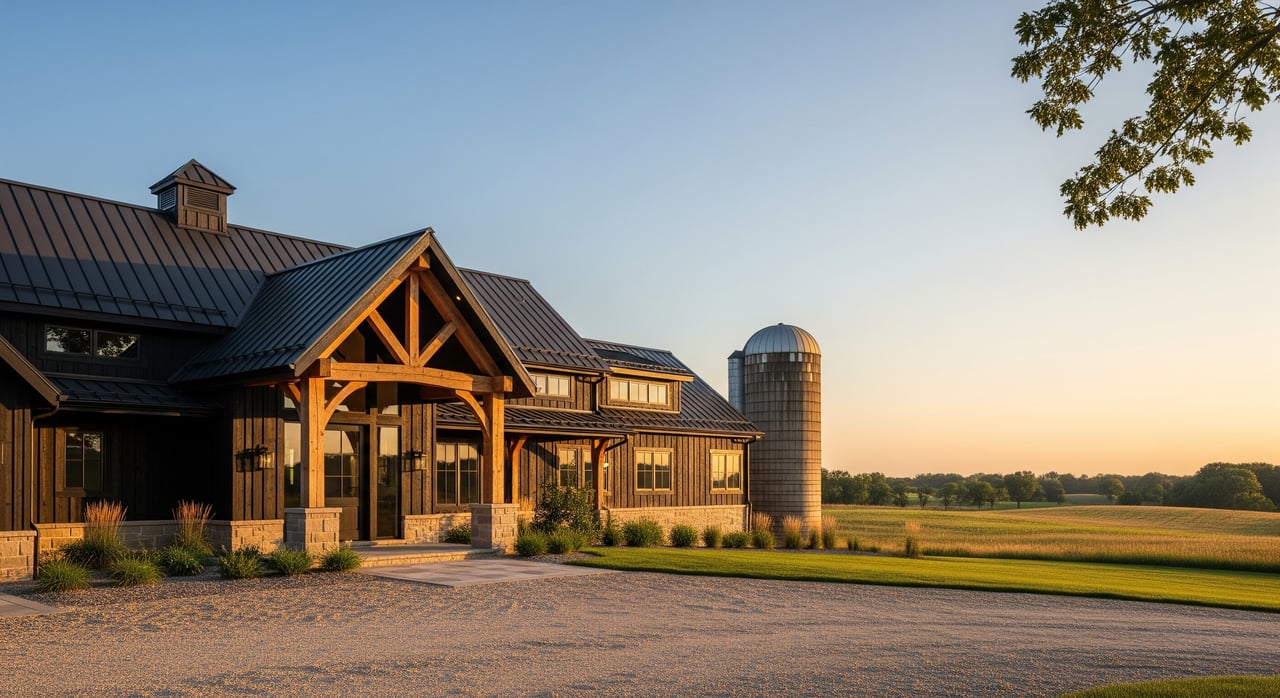
Thinking about a pole barn home in Franklin Grove and wondering what it really takes to make one comfortable, code compliant, and financeable? You are not alone. Many rural buyers want flexible space, lower exterior maintenance, and room for equipment or hobbies. In this guide, you will learn what a pole barn home is, how these homes are built for northern Illinois, permit and financing checkpoints in Lee County, and a clear buyer checklist. Let’s dive in.
Pole barn home basics
A pole barn home, also called a post-frame dwelling, uses vertical posts set in the ground or on piers to support the roof and walls. The outer shell often features metal siding and roofing, while the interior can be finished like a traditional house.
A barndominium is simply a finished living space inside a barn-style or post-frame building. It can include bedrooms, bathrooms, a full kitchen, and modern mechanical systems.
These homes are different from manufactured homes. Post-frame and barndominium structures are site built to local building codes, while manufactured homes are built to HUD standards with different rules for placement and financing.
How they are built
Structure and foundation
Post-frame systems rely on treated timber or metal posts, girts and purlins, and roof trusses that allow large, open spans. Foundations vary. In our climate, you will see concrete piers, slab-on-grade, insulated slabs, or conventional footings under finished living areas. Frost depth and soil conditions drive the right choice.
Insulation and finishes
The metal shell conducts heat, so insulation and air sealing matter. Common strategies include spray foam against metal panels to limit condensation, fiberglass batts in framed interior walls, and rigid foam under the slab. Interior stud walls allow drywall, plumbing, and wiring similar to a conventional home.
Codes and structural loads
Post-frame homes must meet local building codes for structure, egress, energy, and safety. Northern Illinois snow and wind loads are key design inputs. To understand how codes apply, review the International Code Council guidance. Engineered connections and proper anchorage are critical for long-term performance.
Popular features in Franklin Grove
- Open great rooms and high ceilings with exposed beams.
- Flexible floor plans, including lofts and large kitchens.
- Oversized garages or equipment bays for tractors, trailers, or hobbies.
- Mixed residential plus storage uses, subject to local zoning.
If you want both living space and equipment storage, verify that your zoning allows combined uses and that fire separation details meet code.
Pros and cons in Lee County
Pros
- Cost efficient for large open spans and simple shells.
- Flexible layouts with clear spans and tall bays.
- Faster shell construction compared to some conventional builds.
- Durable exteriors when metal roofing and siding are maintained.
Cons
- Energy pitfalls if insulation and air sealing are not done right.
- Fewer comparable sales can complicate appraisals and resale.
- Some lenders and insurers apply extra scrutiny to non-standard builds.
- Aesthetics vary. Some buyers want a more traditional exterior.
Financing and insurance checkpoints
You can finance a pole barn home with several loan types if the home is permanent, meets code, and shows marketability. Conventional lending is common when there is a permanent foundation and complete, code-compliant finishes. FHA and VA may be possible if the dwelling meets program rules. You can review FHA program basics through HUD’s single-family programs. USDA Rural Development may work for qualifying properties and buyers in rural areas; verify addresses and borrower eligibility on the USDA eligibility map. For new construction, many buyers use construction or construction-to-permanent loans. Owner-builder paths can be harder to finance.
Appraisals can be challenging if there are few nearby barndominium sales. Lenders may lean on the cost approach or wider-area comparables. High-quality plans, clear construction contracts, and a reputable contractor make underwriting and appraisal smoother.
Insurers often cover barndominiums and post-frame homes. Underwriting will look at your roof and wall materials, foundation type, heating system, and distance to fire services. Some carriers add wind or hail endorsements for metal components or adjust premiums for mixed residential and equipment storage uses.
Permits and zoning in Franklin Grove and Lee County
First, determine if your site is inside Franklin Grove village limits or in unincorporated Lee County. The jurisdiction sets your zoning rules, setbacks, and permit steps.
Common approvals include:
- Building permit with plan review, inspections, and final sign-off.
- Septic system design and permit through the county health department.
- Well permit and required testing for private wells.
- Driveway or culvert permit from the county or township highway authority.
- Zoning verification for mixed residential and storage uses, plus setbacks.
- Floodplain check. Use the FEMA Flood Map Service Center to see if your site triggers additional requirements.
- Electrical, plumbing, and HVAC permits, often with licensed trades.
Local codes and processes can change. Confirm current rules with the Franklin Grove village office or Lee County Building and Zoning before you design or buy.
Site and climate must-dos
Northern Illinois winters bring low temperatures and snow events. Insulate and air seal to modern standards, size HVAC for open volumes, and plan safe roof drainage and egress. Frost depth and soils will guide pier depths and footing details. Grade the site to shed water, add perimeter drainage if needed, and avoid low spots that splash against metal siding. Protect treated posts from long-term moisture and watch for potential pests.
Buyer due diligence checklist
Use this list when you evaluate a pole barn home or plan a build:
- Verify jurisdiction and permits. Request permit history, final inspections, and any engineered plans.
- Foundation and posts. Look for rot or decay at posts, settlement, and water pooling.
- Insulation and air sealing. Ask for R-values, insulation type, vapor barriers, and thermal breaks.
- Condensation control. Check for stains, rust, or mold on metal panels, and inside roof or attic spaces.
- Mechanical systems. Confirm HVAC capacity is sized for high ceilings and open plans.
- Electrical service. Confirm panel amperage and room for future loads.
- Plumbing and septic. Review septic permits, design, age, and last pumped date. Check well yield and water quality tests.
- Fire separation. If there is an attached equipment bay, check for rated walls and doors per local code.
- Roof and siding. Inspect metal roof age, fasteners, flashings, and sealants.
- Lender and insurance. Get pre-approval and an early insurance quote.
- Appraisal strategy. Discuss likely comps and the cost approach with your lender.
Is a pole barn home right for you?
If you want open space, large bays, and a quick-to-assemble shell, a pole barn home in Franklin Grove can be a great fit. The key is thoughtful design and documentation. Proper insulation, moisture control, and a permanent foundation will make your home comfortable and easier to finance, insure, and resell.
You do not have to navigate this alone. With decades of experience in rural and small-town properties across the Rock River Valley, Carla Benesh can help you evaluate opportunities, confirm local requirements, and connect you with lenders and inspectors who understand post-frame homes.
FAQs
Are pole barn homes legal in Franklin Grove and Lee County?
- Yes. They are allowed when built and finished to local codes with proper permits. Zoning rules set allowed uses, setbacks, and mixed-use limits.
Can I get a mortgage for a barndominium in this area?
- Often yes. Lenders look for a permanent foundation, full code compliance, and marketability. Construction-to-permanent loans are common for new builds.
How energy efficient is a metal-shelled home in northern Illinois?
- The shell alone is not efficient. With spray foam or insulated wall systems plus good air sealing, you can meet modern energy expectations.
What should I watch for during an inspection?
- Focus on post and foundation condition, insulation and vapor control, roof fasteners and flashings, HVAC capacity, septic and well records, and permit documentation.
Will insurance be harder to get for a pole barn home?
- Many carriers will insure them, but underwriting will consider metal roof and wall materials, the foundation, heating system, and any attached equipment bays.
How does a floodplain affect my project?
- Building in a floodplain can add requirements and costs. Check your site with the FEMA Flood Map Service Center early in planning.